Hair Powder vs Fibers vs Spray: Which Concealer Is Right for You?
July 11, 2026 · 1 min read · by DenseLines Team
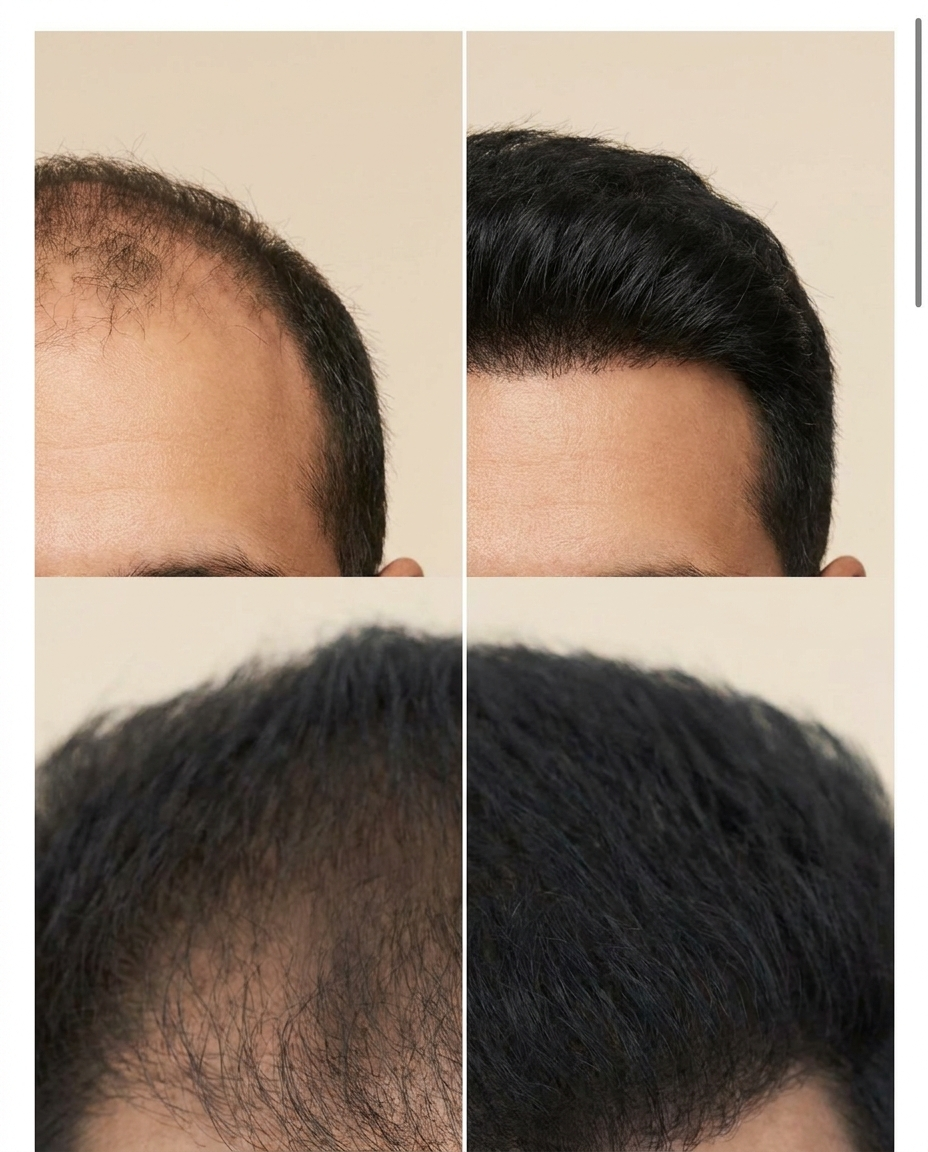
All three concealer types do the same job — reduce visible scalp — but they behave very differently in wind, rain, and daily handling. Here is the honest comparison.
Tinted powder (compacts)
Strengths: most natural matte finish, precise application on hairline and part, no drift, fits in a pocket with a built-in mirror, works on skin and hair, easy to build up. Weaknesses: covering very large bald areas takes longer than spraying.
Keratin fibers
Strengths: add visible bulk to existing strands over larger areas; good for diffuse thinning on the crown. Weaknesses: need existing hair to cling to (weak on the front hairline), can shed in wind or rain unless sealed with spray, messy to apply over a sink.
Root spray
Strengths: fastest for large areas; good for full regrowth lines. Weaknesses: overspray on forehead and clothes, can stiffen hair, shine can look unnatural in daylight, cans run out fast and cannot fly in hand luggage over 100 ml.
The short version
Hairline, temples, part and beard: powder. Diffuse crown thinning with plenty of remaining hair: fibers (sealed with spray). Full-width regrowth lines in a hurry: spray. If you want one product that handles the visible-edge cases best, start with a tinted powder compact.
Quick answers
What is the most natural-looking hair loss concealer?
Tinted matte powder, because it colors both skin and hair without shine and without visible particles.
Do hair fibers work on a receding hairline?
Poorly — fibers need existing hair to cling to. On the front hairline and temples a tinted powder covers better.
Can I combine powder and fibers?
Yes: fibers for bulk on the crown, powder to define the hairline and part. Apply fibers first, powder second.