Which Shade Should You Choose? The DenseLines Shade Guide
July 11, 2026 · 1 min read · by DenseLines Team
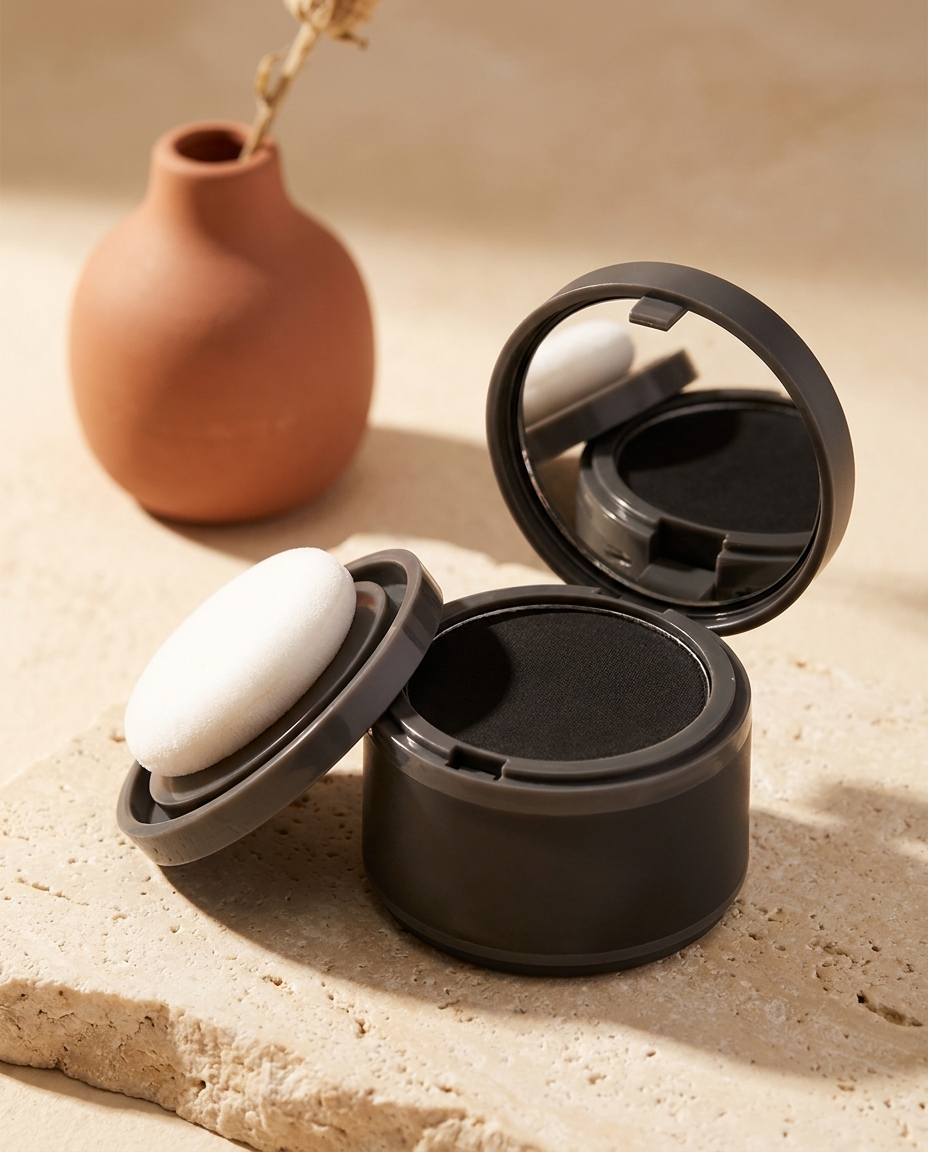
Shade matching decides whether powder disappears into your hair or sits on top of it. The good news: hair powder is forgiving, and one rule solves most doubts.
The one rule: match your roots, and go darker when unsure
Match the color at your roots, not your (often lighter) lengths. If you sit between two shades, take the darker one — slightly darker reads as shadow and density, while too light reads as dust.
The five DenseLines shades
- Black — black hair and dark beards.
- Dark Brown — most dark-brown hair, including cool undertones.
- Medium Brown — the middle of the brown spectrum.
- Light Brown — light brown to dark blond.
- Ash Blonde / Gray — blond hair and grown-out gray; also softens contrast on salt-and-pepper hair.
Special cases
Highlighted hair: match the base color at the roots. Going gray: if you cover the gray, match your colored hair; if you embrace it, Ash Blonde/Gray evens the transition. Beards: beards are usually darker than head hair — most people take Black or Dark Brown.
See the swatches and pick yours on the product page.
Quick answers
Should hair powder be lighter or darker than my hair?
Slightly darker. Darker powder reads as shadow and density; lighter powder looks dusty.
Which shade works for gray hair?
Ash Blonde/Gray if you keep the gray; otherwise match the shade of your colored hair.
Can I mix two shades?
Yes — apply the darker one first, then soften the edge with the lighter one. Useful for highlights and transitions.